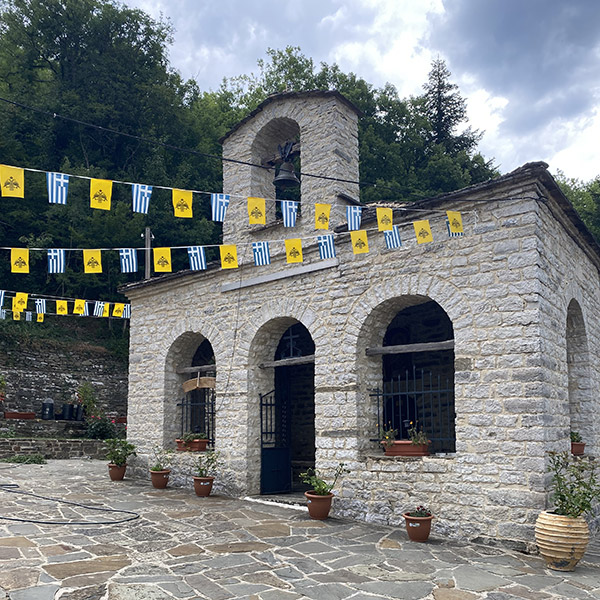
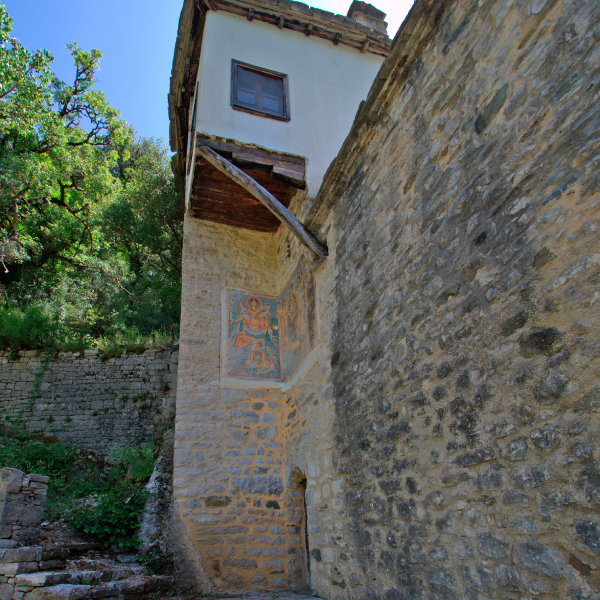
Most of the churches in Zagori date from the 17th-18th century onwards, although some older foundations survive. In most villages the central church consists of a large basilica, built of stone with a wooden roof, covered with slates. They are decorated mainly by Epirus hagiographers, according to the Byzantine tradition. The entrance to the church is usually protected by a walled portico. The bell tower is usually at a distance from the church.
Rogovou Monastery
The stone-built monastery, which is dedicated to the birth of St. John the Baptist, was built in the 11th century (thought to have been completed in 1034). Located between Tsepelovo and Kapesovo, it is considered one of the country’s great monasteries and is famous for its gilded wood-carved temple and frescoes from 1765. Many people visit it as the icon of St. John the Baptist is considered miraculous. On the 24th of June there is a festival in the monastery.
Monastery of Panagia (Virgin Mary) Spiliotissa
It was built in 1579, between Aristi and Papigo and is dedicated to the Assumption of the Virgin Mary. It served as a shelter for the inhabitants during the Turkish occupation. The wood-carved temple and the frescoes of excellent Epirus technique, characteristic elements of the 17th century, stand out.
Monastery of Agia Paraskevi in Monodendri
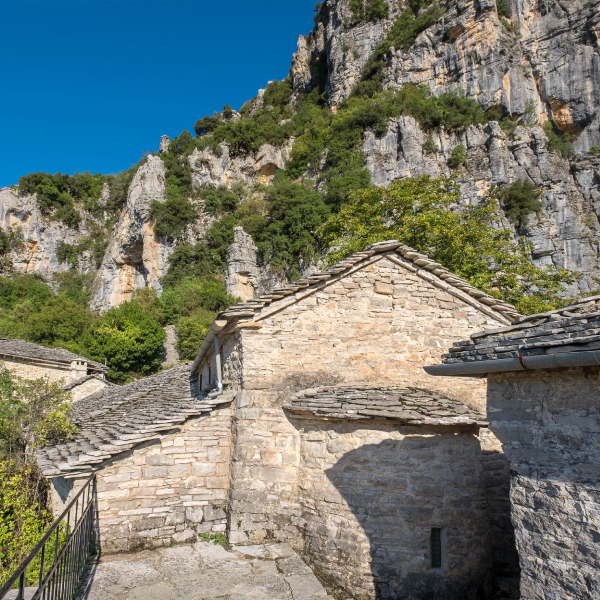
It is one of the oldest monasteries of Epirus, as it was built in 1412. It is a real stone fortress, with a unique view of the edge of the cliff of Vikos Gorge, while a picturesque cobbled downhill path leads to its entrance.
Church of St. Nicholas in Tsepelovo
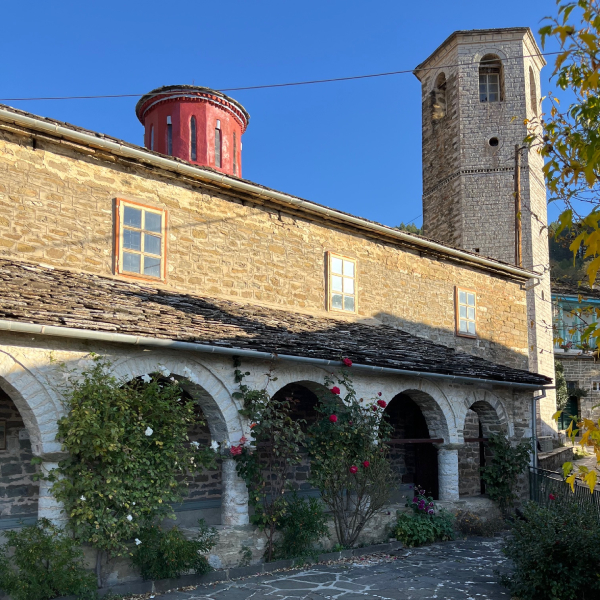
Built in the 18th century in the style of a three-aisled basilica with a dome, it is a classic example of a Zagorian church. Inside there are excellent hagiographies and woodcarvings from the time of its construction, but with the passage of time and the church’s liturgical use, many of these works of Orthodox art have been altered. In 1992, with private funding, they were conserved and restored.