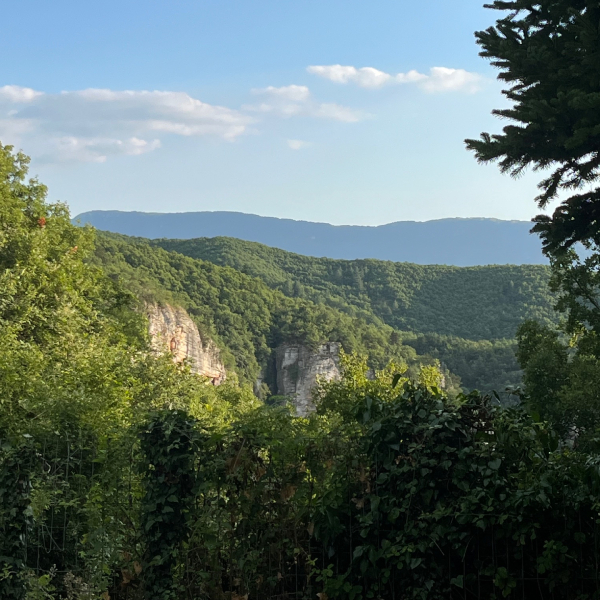
Its entrance is located among the towers of Astraka, above Mikro Papigo. With a depth of 408 meters, it is among the largest vertical chasms in the world, formed by the combined action of water and ice. At a depth of 180 metres there is a small ledge with permafrost, which remains unmelted all year round. A unique room with a small lake and commemorative plaques from Greek and international expeditions adorn the walls of the cave. The chasm was discovered in 1965 by English cavers. Jim Eyre attempted the first descent, with rope ladders, in 1966, reaching a depth of 156 metres.
Stone Forest
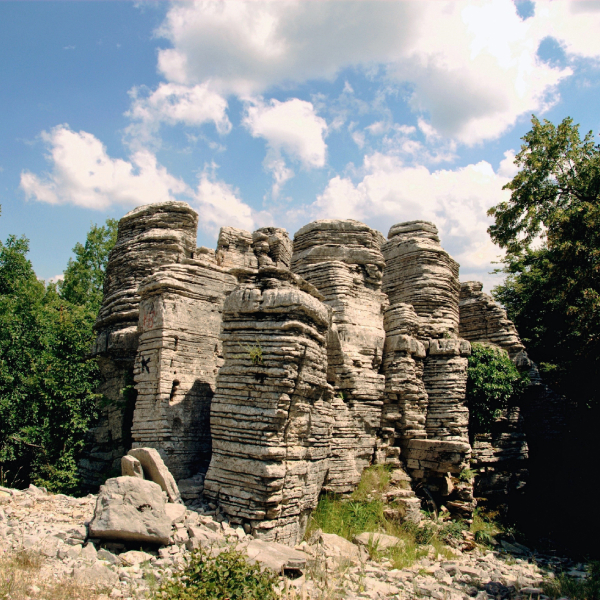
Near Monodendri is the Stone Forest. It is an important geotope, with great tourist and educational value. Limestone slabs, placed one on top of the other, create a rare natural phenomenon found in very few places in the world. The ideal time to visit it is during the autumn and winter months, when its morphology is clearly visible.
Ladder of Vradetos
At an altitude of 1,340 m, the village of the same name is famous for its Skala, the farthest of the four that have survived. It is a cobbled street with 1,200 steps, carved from local stone. Until 1970 it was the only communication route with the neighbouring village of Kapesovo.
Swimming pools in Papigo
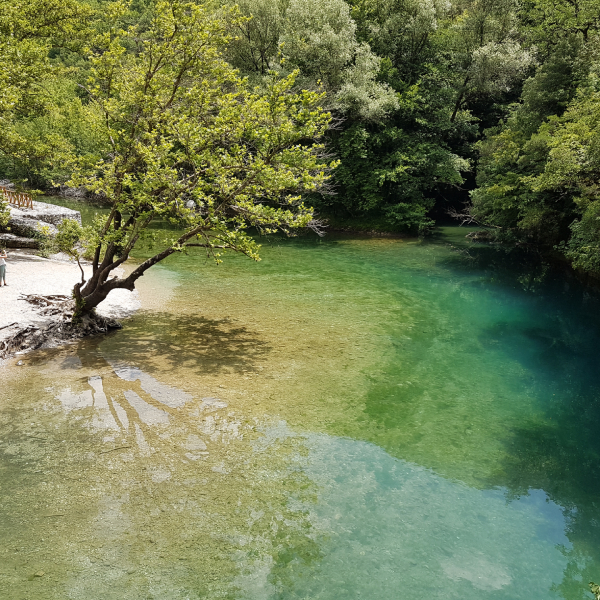
The swimming pools in Papigo (or Ovires Rogovou) are natural pools of rare beauty. They even entertained Ali Pasha, who enjoyed his summer baths there. It is a narrow passage of the Rogovu stream, which forms a small gorge and, with the flow of water, creates small natural lakes.
Vikos Gorge
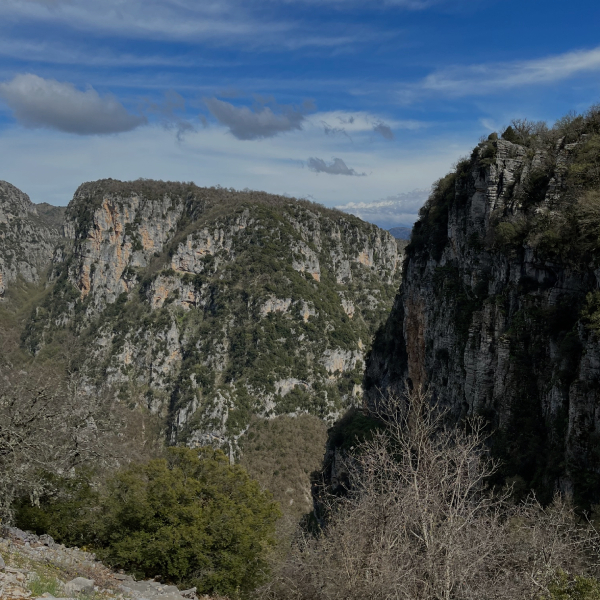
One of the most important natural monuments of our country, the Vikos Gorge is 12 km long. And it holds a Guinness record for being the deepest in the world! Together with the Voidomatis River, it constitutes the core of the Vikos-Aoos National Park. It takes 5 hours to cross it.
Voidomatis River
One of the cleanest rivers in Europe, with a constant temperature of 4°C all year round, the Voidomatis starts from the village of Vikos, crosses the Vikos gorge and flows into the Aoos. Along the way it ‘meets’ some of the most beautiful monotoxic, continental bridges. The most famous is the bridge of Kleidonia at the exit of the Vikos gorge.
It is suitable for various river sports, such as kayaking and rafting.
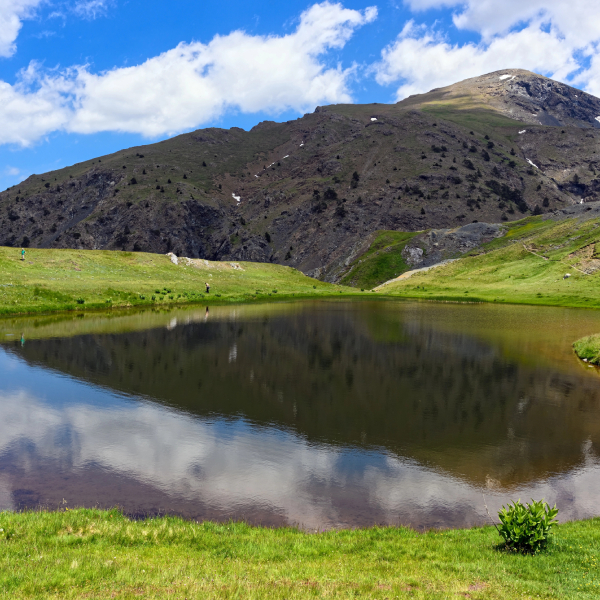
According to the myth, the lake of Tymphe and the lake of the same name on Smolikas were named after the dragons that inhabited each of them. It is said that they had a feud with each other. The dragon of Lake Tymphe threw logs and branches at the other dragon of the Smolikas Lake and the latter threw white stones at the former. The landscape around the lake is bare but impressive, exuding a rare beauty and offering spectacular panoramic views. The ascent to Drakolimni is probably one of the most popular mountaineering routes in Greece.
“Balta di Striga” waterfalls
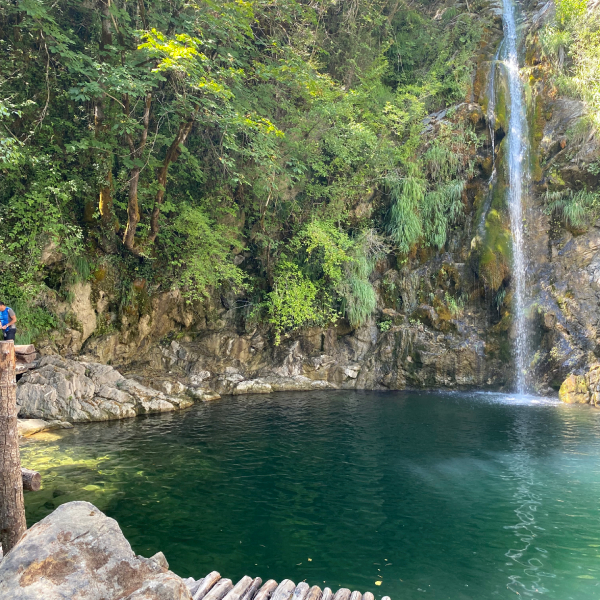
The story is about three successive waterfalls, which form natural swimming pools (ovires), with the largest one reaching a height of 25 meters! Their name means “the little ovira (lake) of the cry” in Vlach. Access is from the path of the church of Agios Nikolaos, from the central square of the village. Although the distance is only one kilometre, the waterfalls were late to become widely known. Around the waterfall there are benches and a stone table for visitors to rest on.
Architecture - Cultural Sights
Paschali’s School
It was founded in 1861 in the village of Kapesovo by a bequest of the Paschalis brothers. It was the largest school in Zagori. Today, among other rare documents exhibited there, one of the few copies of the Charter of Rigas Feraios is kept. It was in operation until 1985. The ground floor of the building has been remodelled by the village’s cultural association to represent the traditional Zagori residence. A number of tools used in Zagori over the last two centuries have been collected there, offering the visitor a folklore experience that functions as a small museum for cultural information.
Rizarios School of Handicrafts
The school of traditional arts, founded by the Rizarios Ecclesiastical School, trains young students in Monodendri, keeping alive the art and tradition of the region. The school has a production workshop, where its graduates work, and a showroom, where their creations are exhibited and for sale. Through these activities, not only are the traditional arts passed on to younger generations, but at the same time incentives and opportunities for professional rehabilitation are created for young people, helping to keep them in their place and prevent them from leaving for the cities. You can see weaving and carpet weaving looms and works on display in the Rizarios premises.
Sarakatsani Stani
It was founded and is maintained by the Brotherhood of Sarakatsani of Epirus and is located in the village of Skamneli. It is a complex of thatched huts – the houses, or “konakia”, with the “boro”, i.e. the fenced yard of the house and the “greki”, the place where the animals are kept. It functions as an exhibition space, which faithfully represents the residence, furniture, tools and other objects from the life of the Sarakatsani. Visitation is free of charge and every year, at the beginning of August, events are held there for the annual meeting of the members of the Brotherhood.
Costas Lazaridis Museum of Natural History
Costas Lazaridis Botanical Museum is located in the village of Koukouli and is hosted in the house of its founder, Costas Lazaridis, who collected specimens from the rich flora of the gorges of the region. In the museum, visitors can see the medicinal plants of Vikos, which were used by local traditional doctors, known as “Vikogiatroi”, for their healing properties.
Agapios Tolis Folklore Museum
The museum operates in the village of Kipi and is housed in three traditional mansions. It includes about 40,000 exhibits from everyday life in Zagorochoria, which Agapios Tolis collected with his personal effort.